Emergency first.
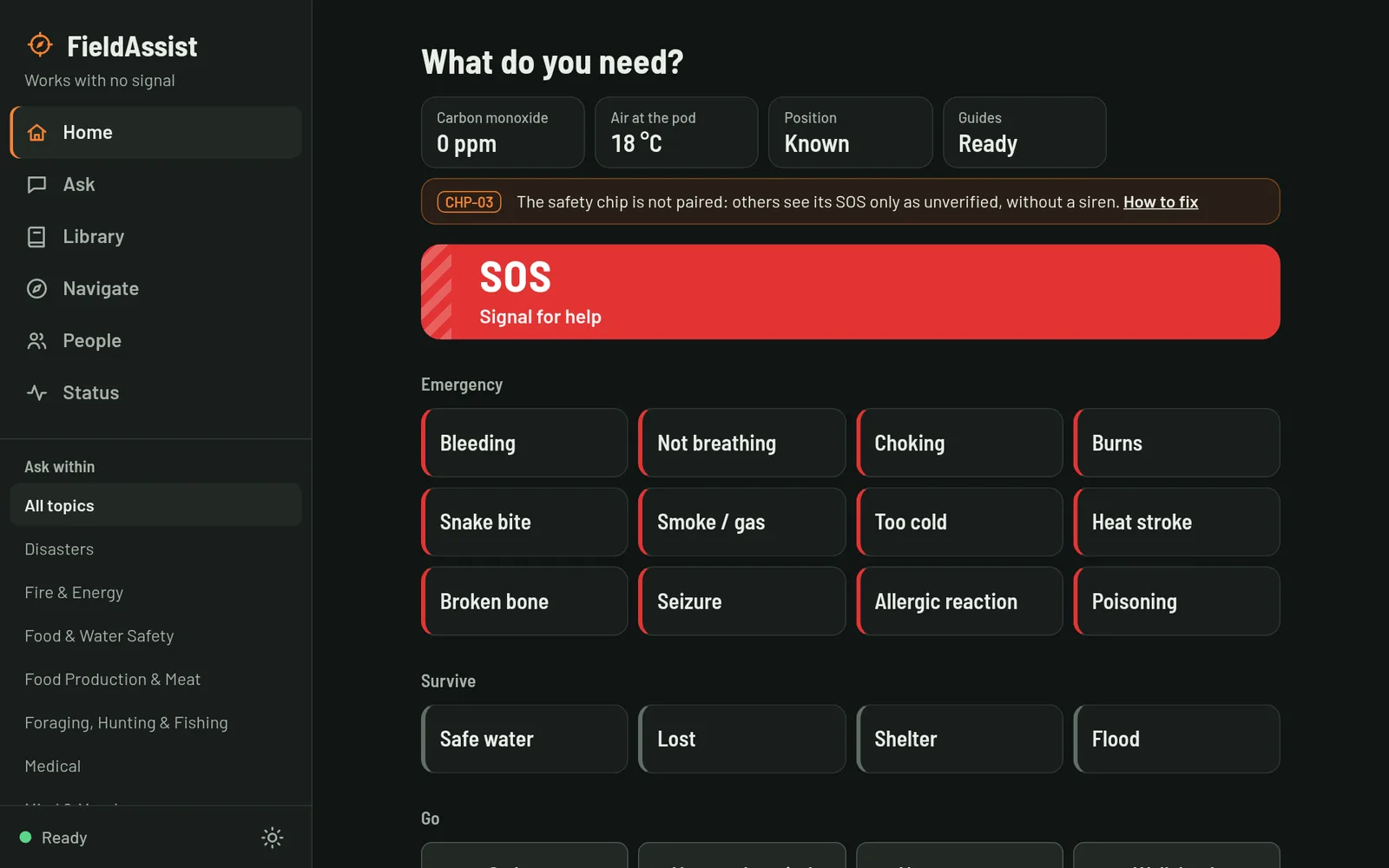
One SOS button and sixteen big tiles: bleeding, not breathing, choking, burns, snake bite, smoke and gas, safe water, lost, flood. Each opens the first steps and a clear "Do not" list. Works by D-pad, with night mode and large text.
First-aid guides, maps and routes, and an off-grid mesh radio for SOS, in one sealed tablet. No internet, no cell towers, no cloud.
Glass and buttons
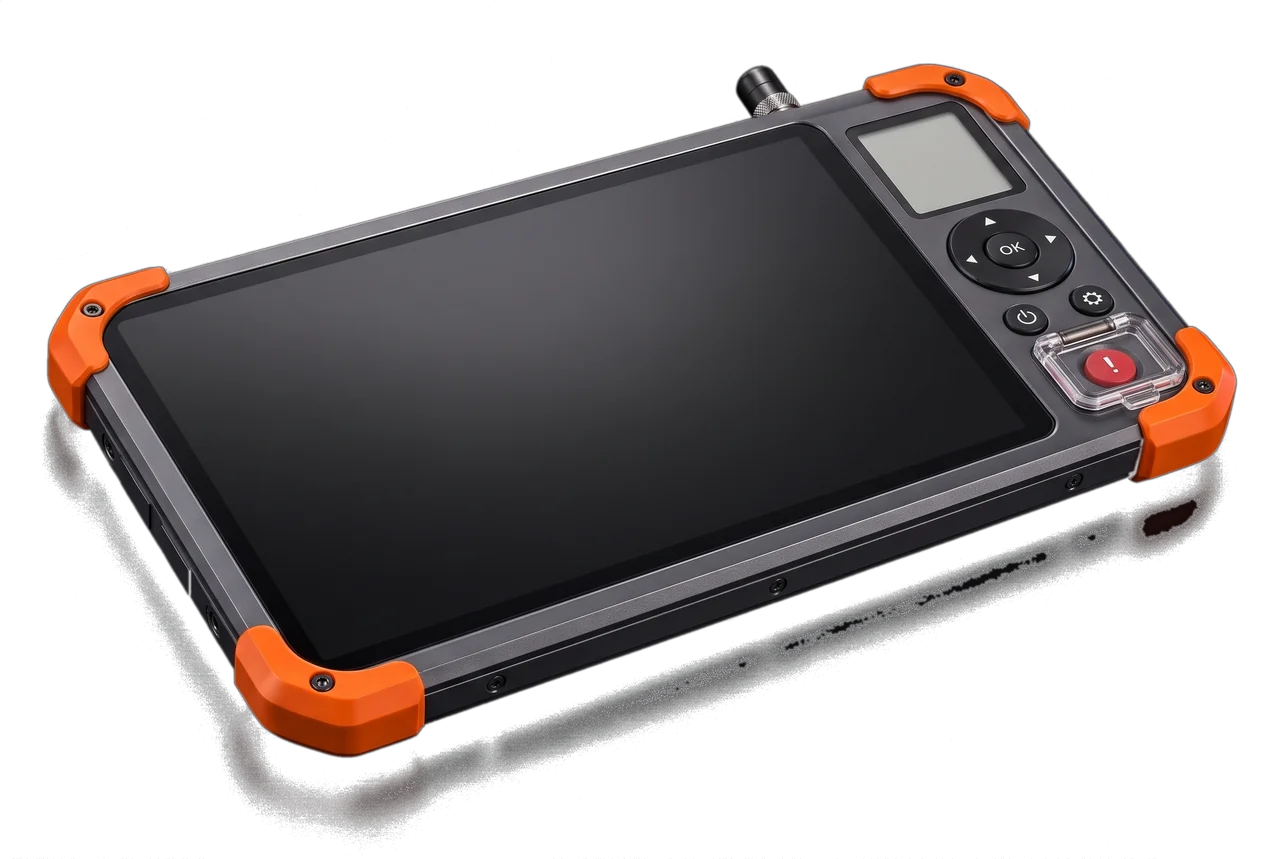
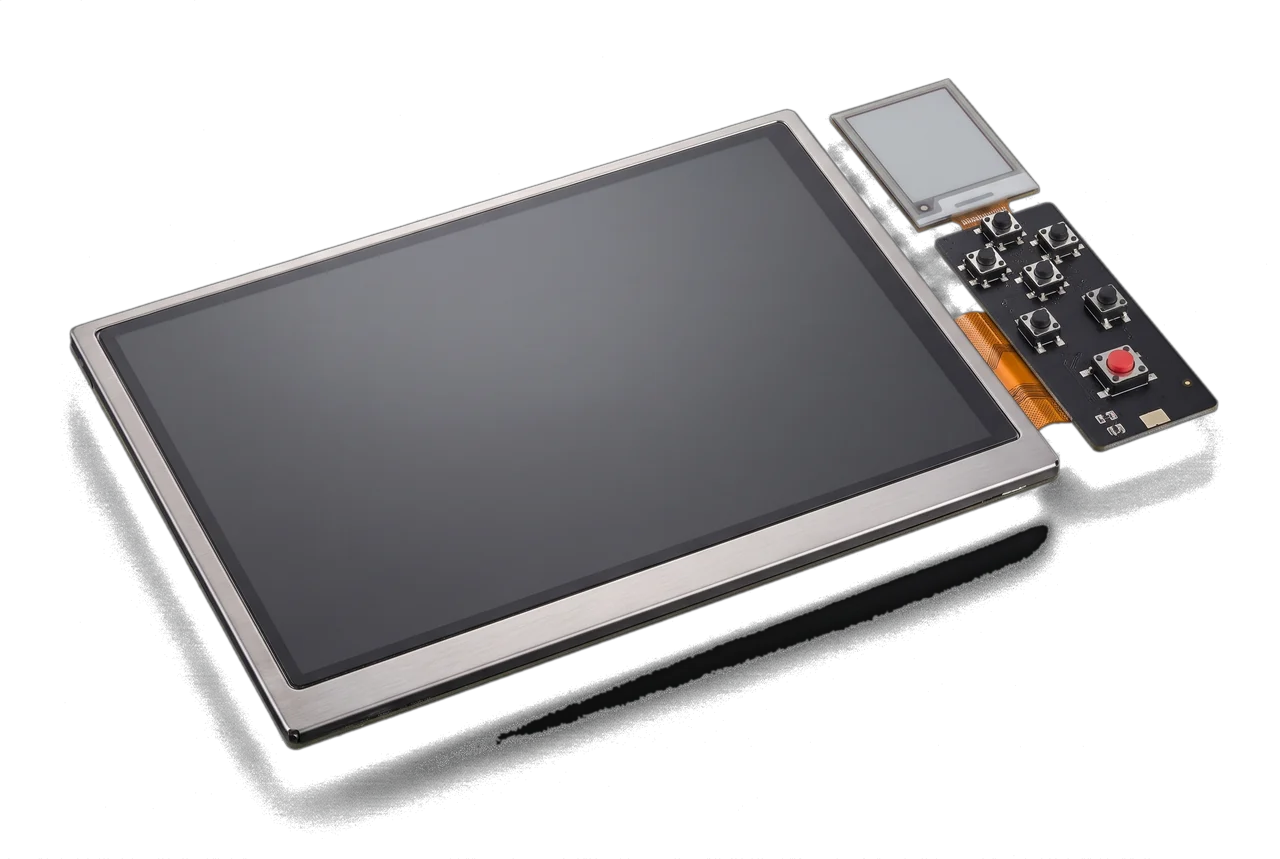
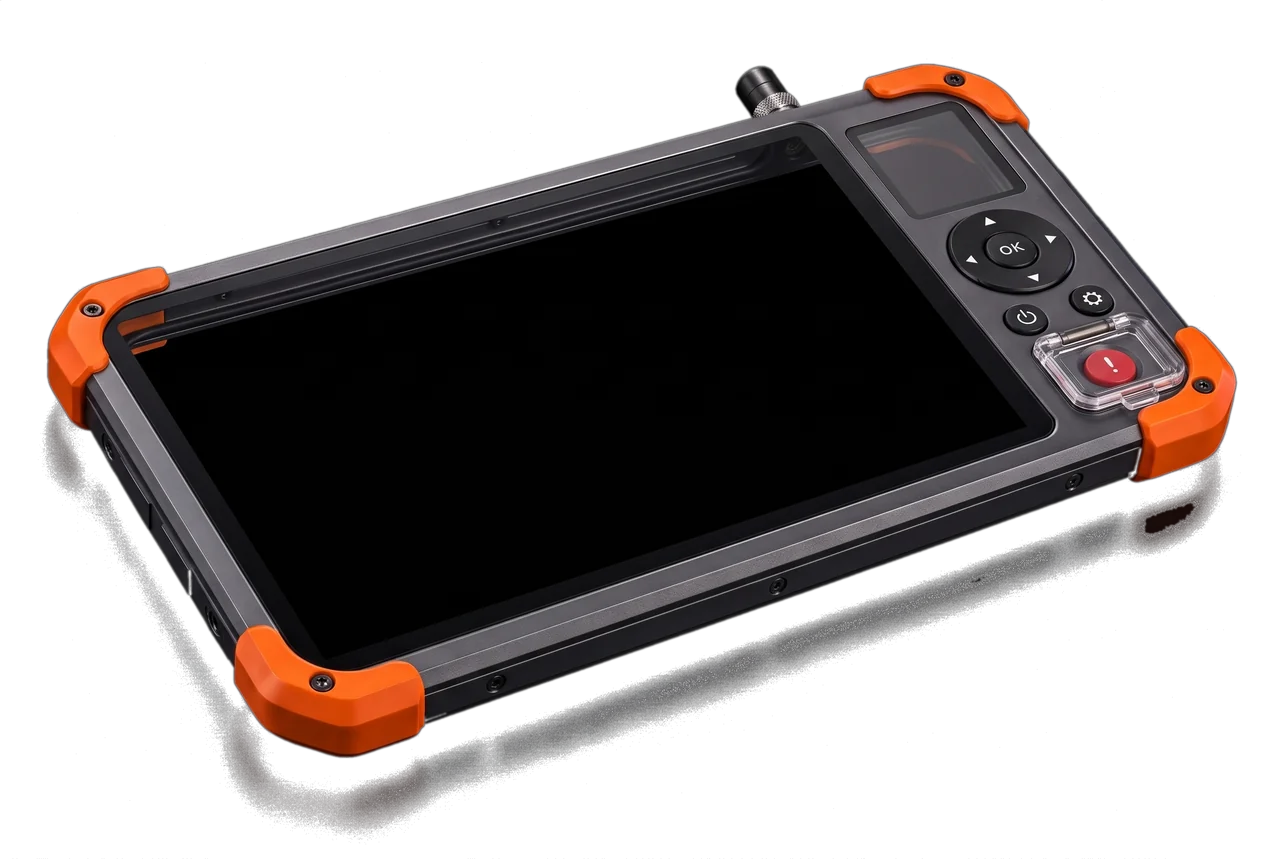
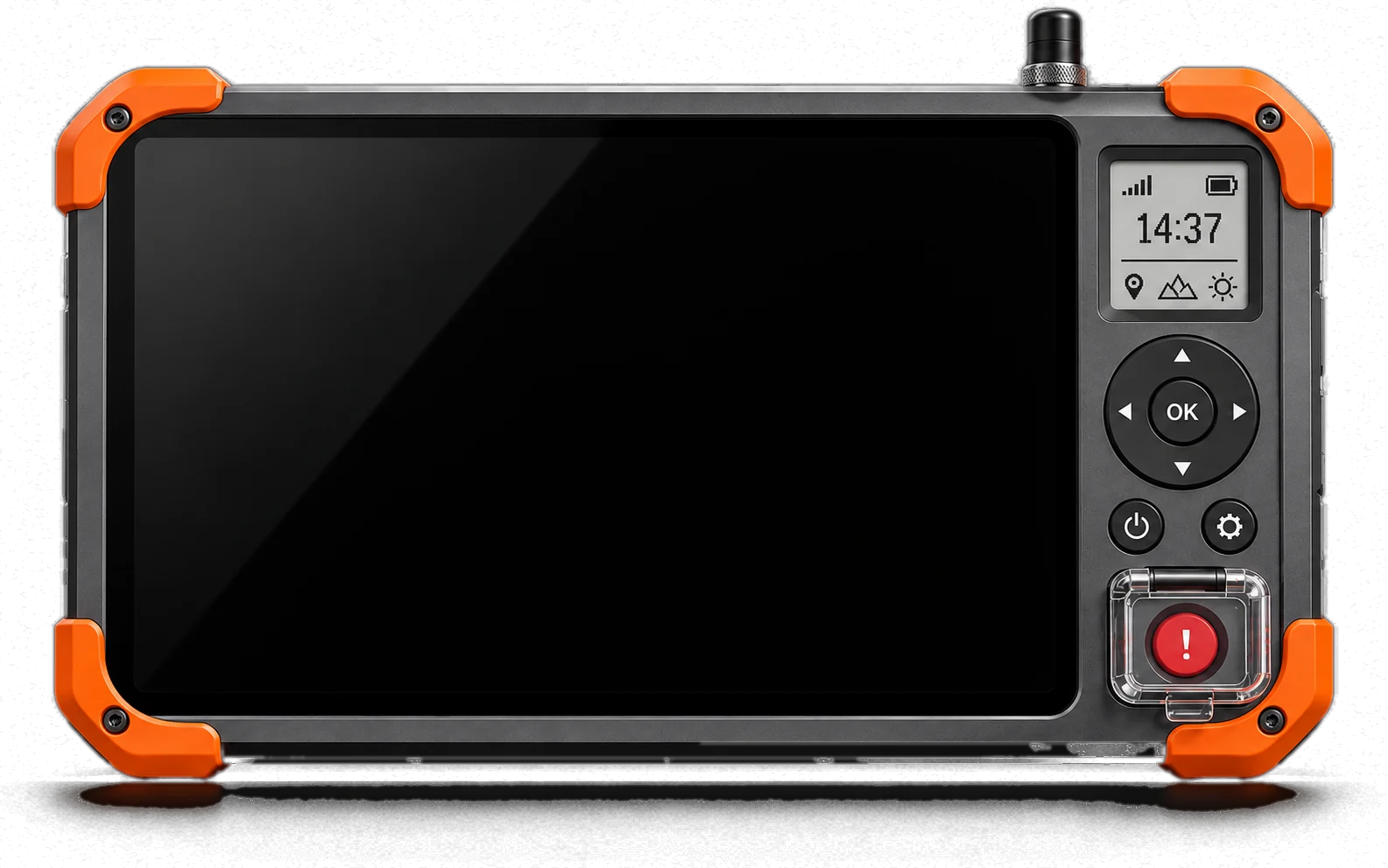
A sunlight-readable touchscreen, plus a button rail that runs the whole interface: D-pad, OK, back, and an SOS key under a flip cover. A small e-paper strip shows time, battery, position and CO with everything else off.
Display
The display is the biggest power draw after the processor, so it sleeps between glances and wakes on any button.
Main board
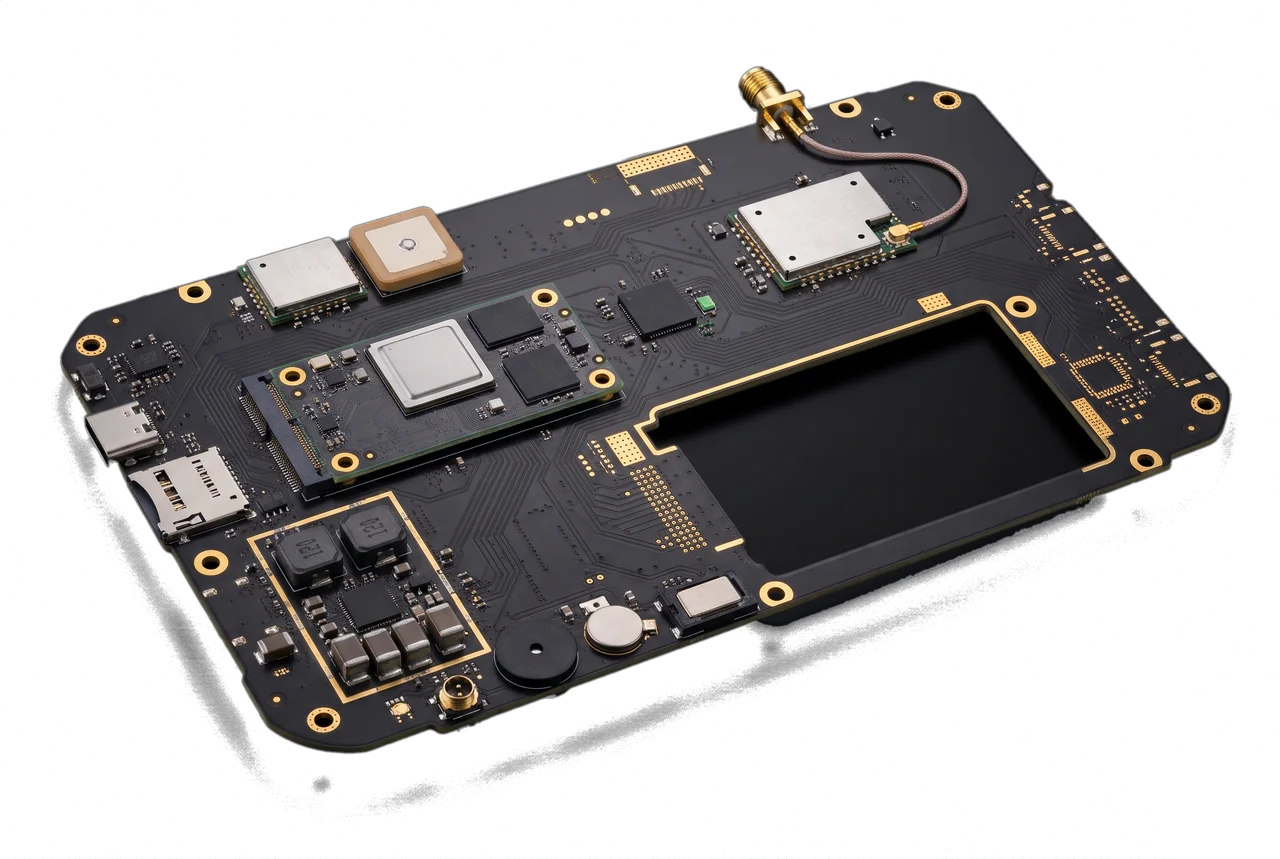
A Linux compute module runs maps, routes and 125 guides from local storage. Beside it, an nRF52840 safety chip stays on: it watches the air, signs and sends SOS by itself, and restarts the main computer if it freezes.
Power
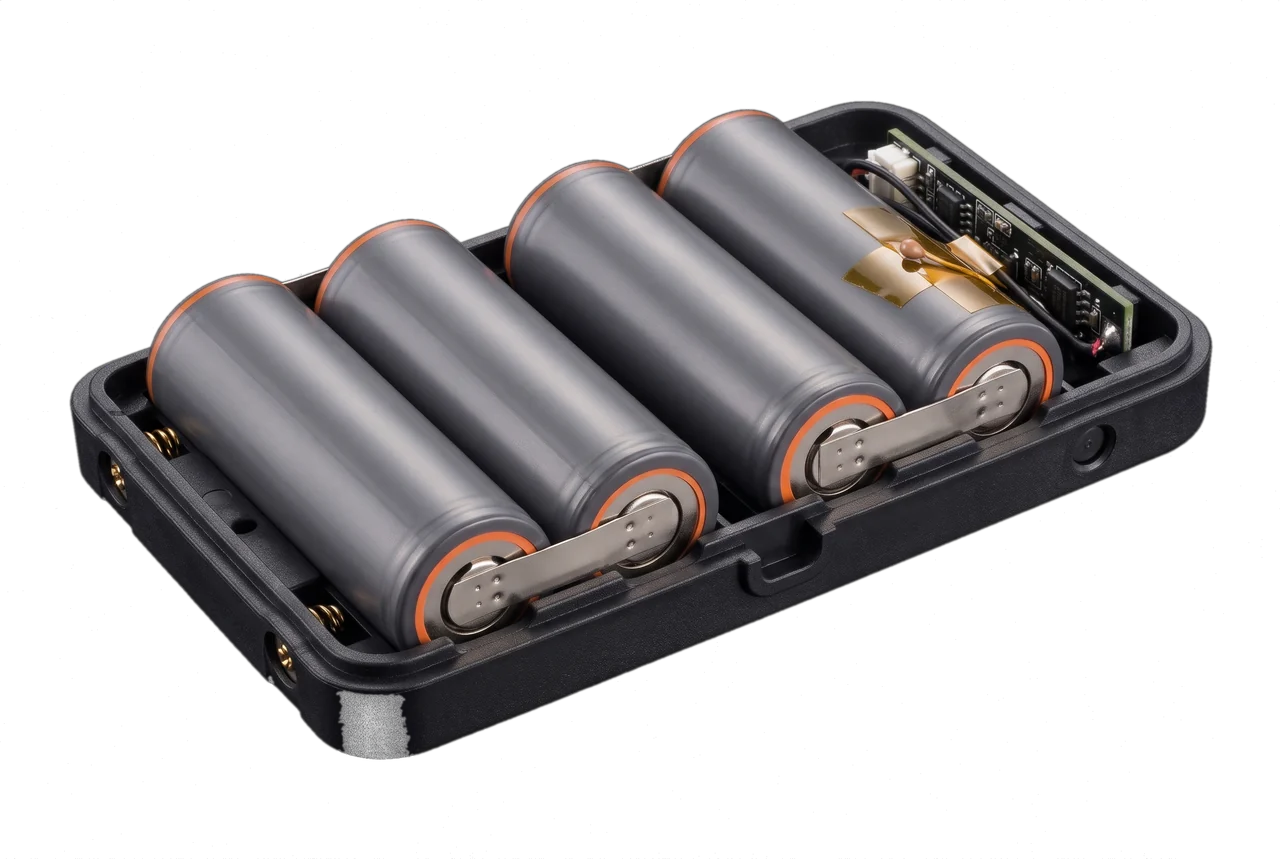
Four standard 21700 cells, about 72 Wh. Charge them by USB-C, solar, 12 V or a hand crank, or swap in fresh ones in the field.
Shell
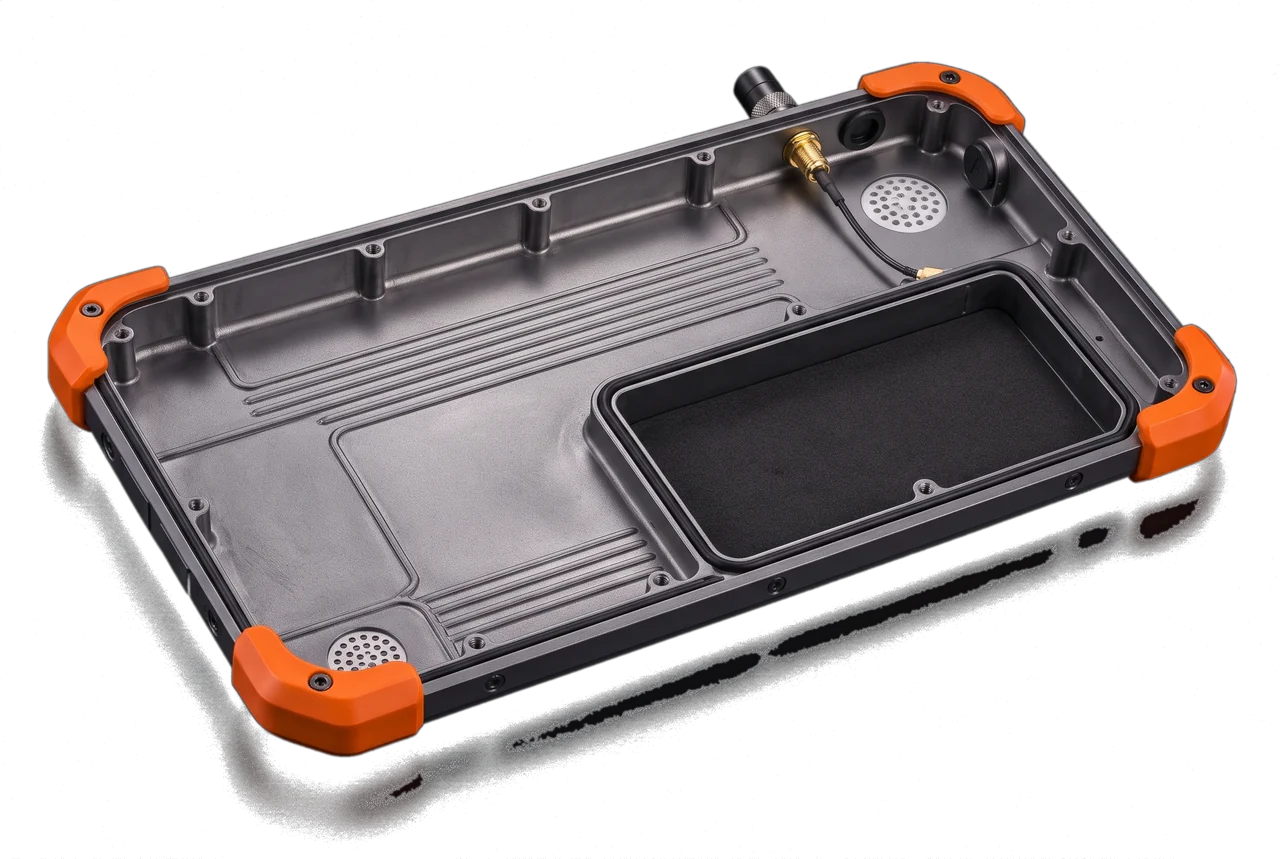
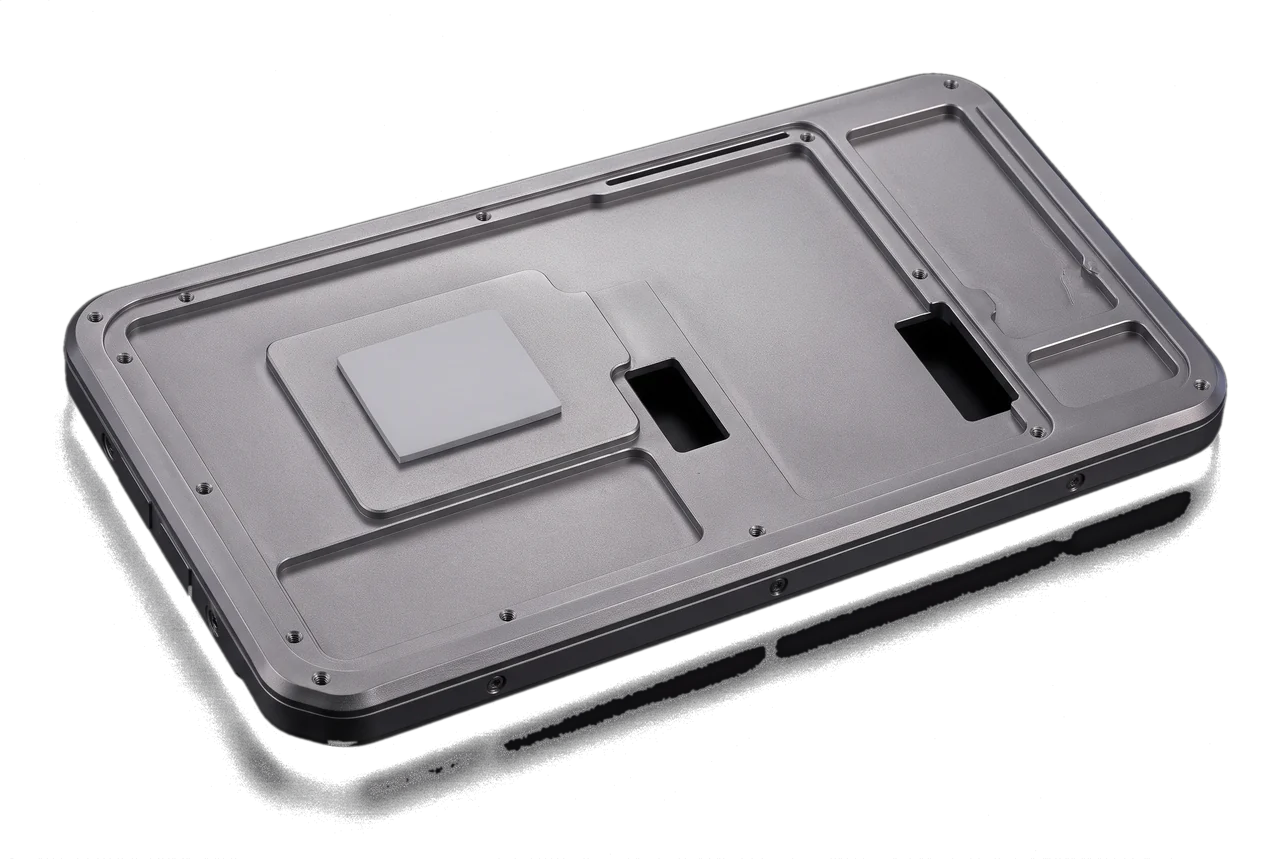
An IP67 target, a gasketed battery door that opens without tools, external antenna ports for GNSS and LoRa, and one sealed port for the clip-on sensor pod.
With the main computer off, the safety chip keeps logging your track, listening to the mesh and watching the air on a fraction of a watt.
6–8 days
Safety chip, GNSS logging, mesh receive, sensors and e-paper. Linux off.
0.3–0.45 W average draw
Estimates from the power budget, on about 62 Wh usable. Expect 20–30% less below 0 °C. To be measured on hardware.
One SOS button and sixteen big tiles: bleeding, not breathing, choking, burns, snake bite, smoke and gas, safe water, lost, flood. Each opens the first steps and a clear "Do not" list. Works by D-pad, with night mode and large text.
Answers come word for word from 125 survival guides across 13 categories, drawn from WHO, Red Cross and similar public guidance, and each one names its source. In testing, a small on-device AI reversed safety advice, so no AI writes answers by default.
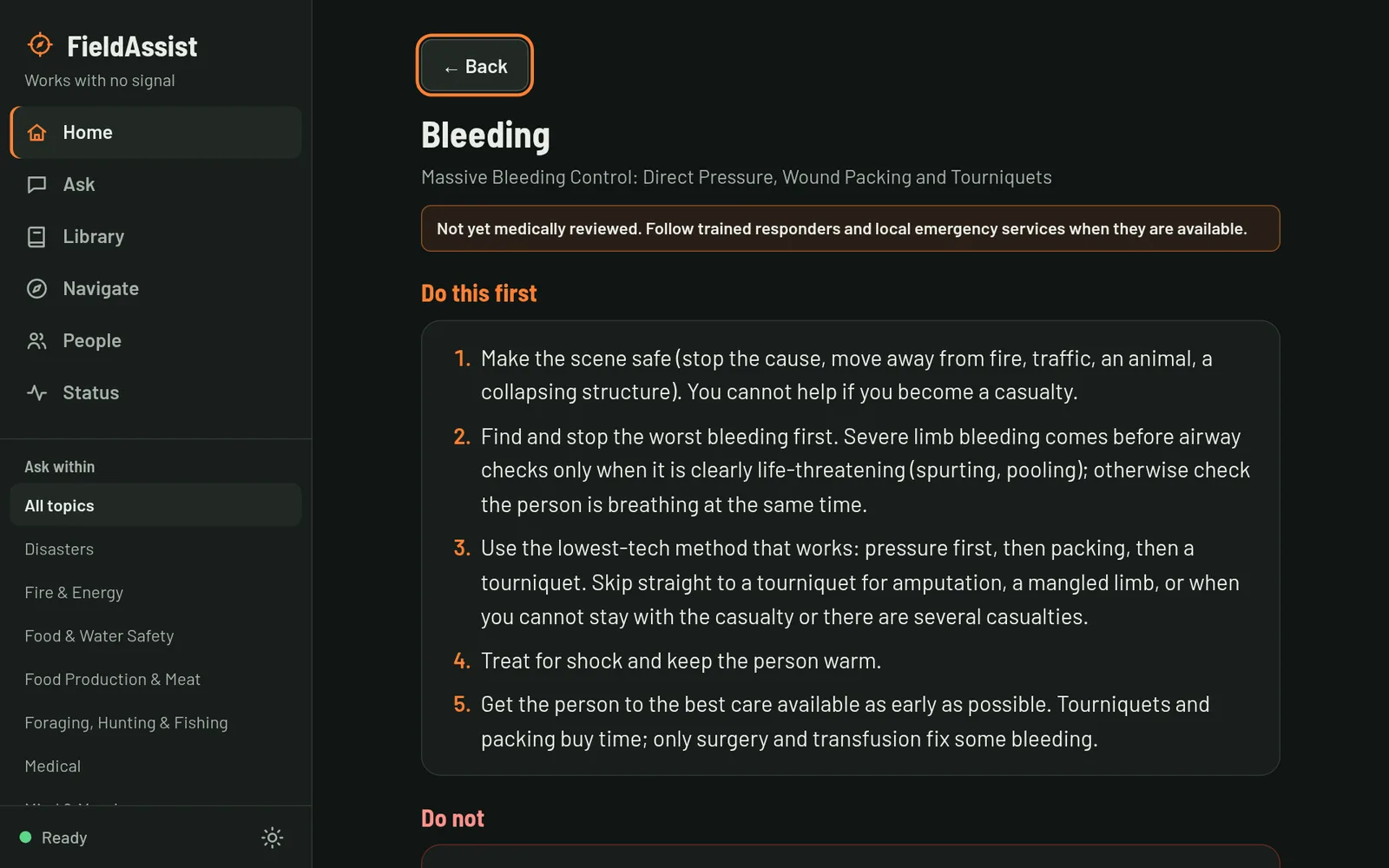
A sensor pod watches carbon monoxide and temperature. When the level climbs, the siren, strobe and vibration start, and the screen tells you exactly what to do.
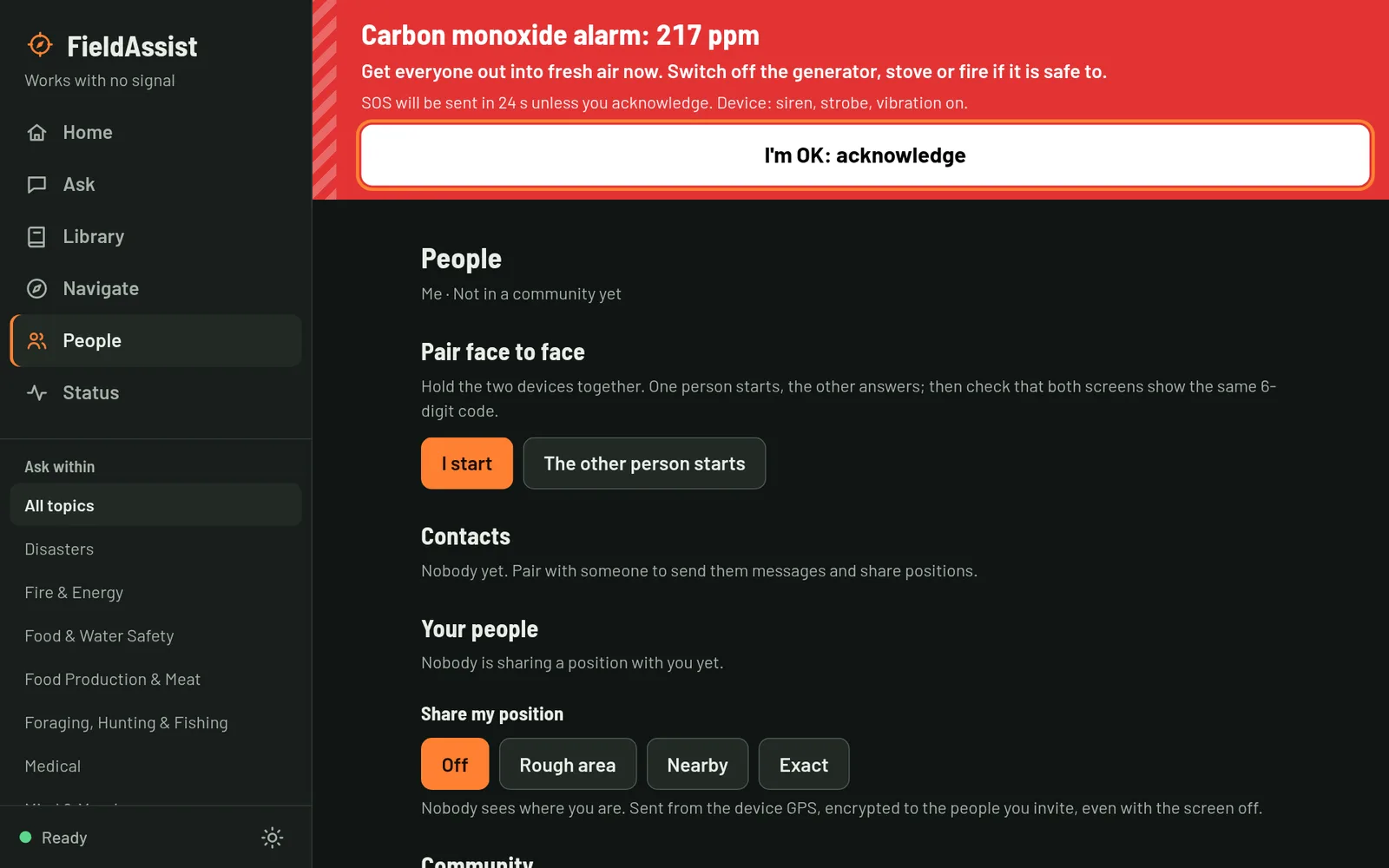
An unanswered alarm escalates to SOS. The safety chip signs it with its own key and sends it by itself, even if the main computer has crashed, and repeats it until someone cancels it.
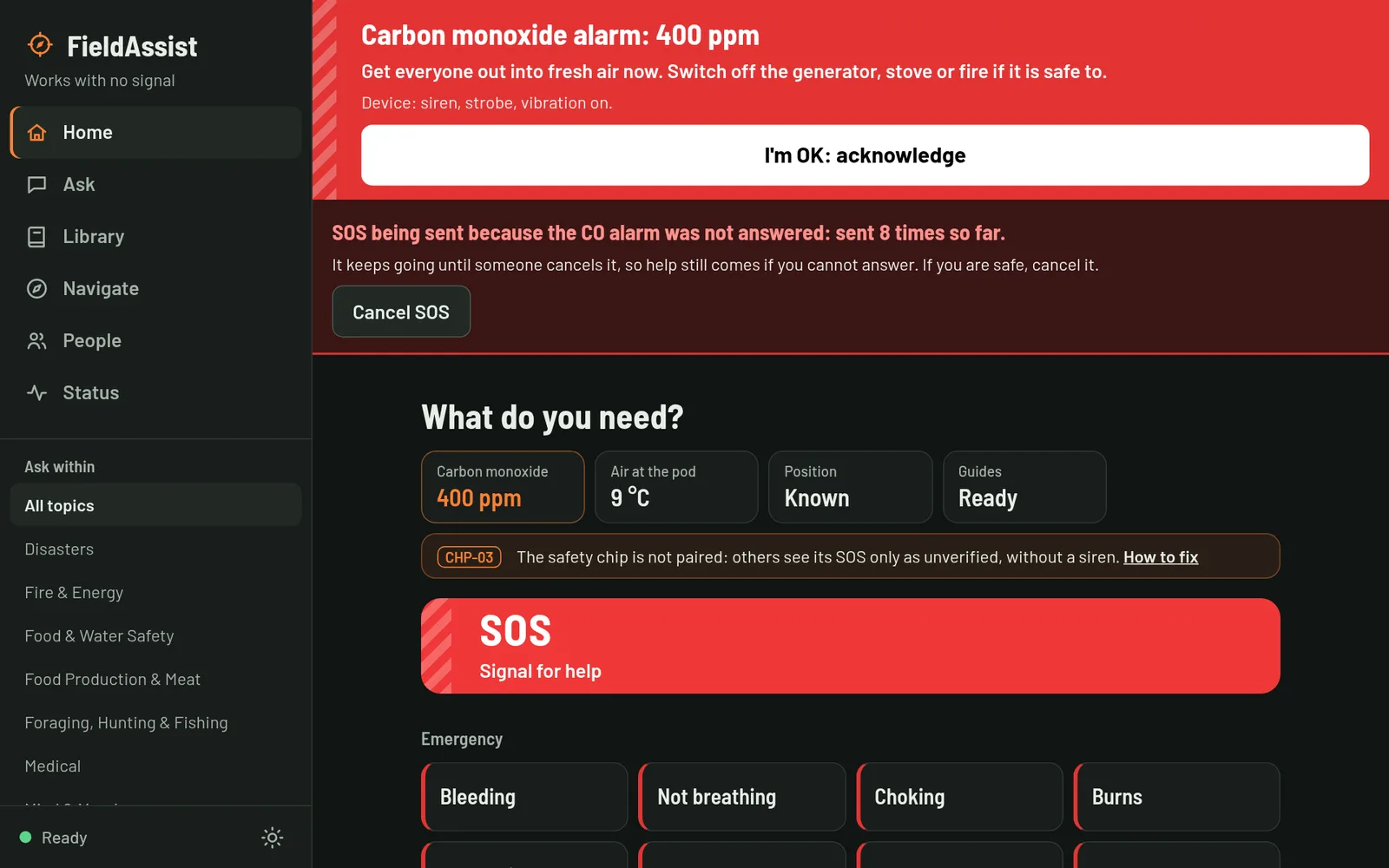
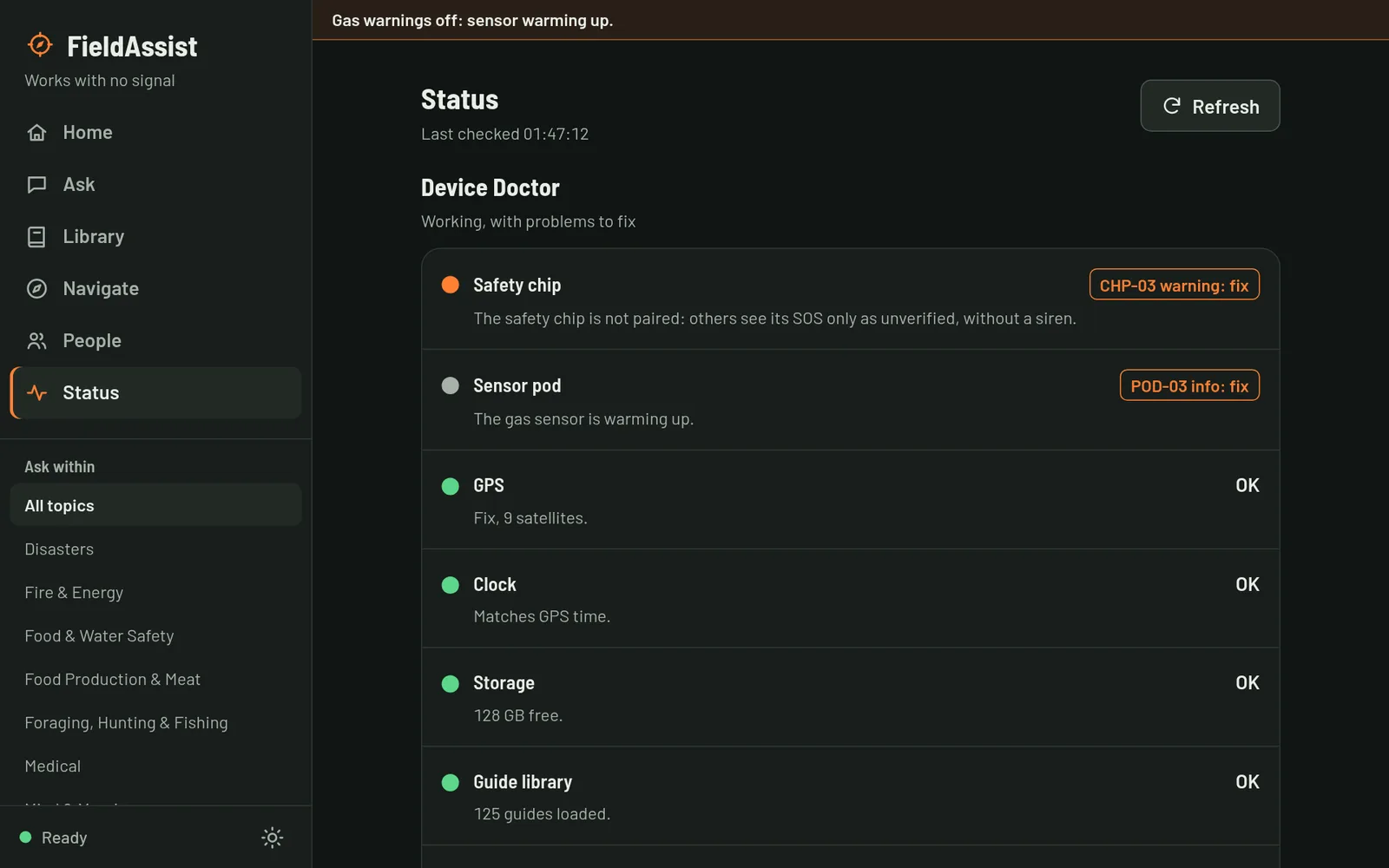
The Device Doctor runs fixed self-tests of the safety chip, sensor pod, GPS, clock, storage, guides, routes and maps. Every fault gets a short code and a fix card with the steps and a backup plan.
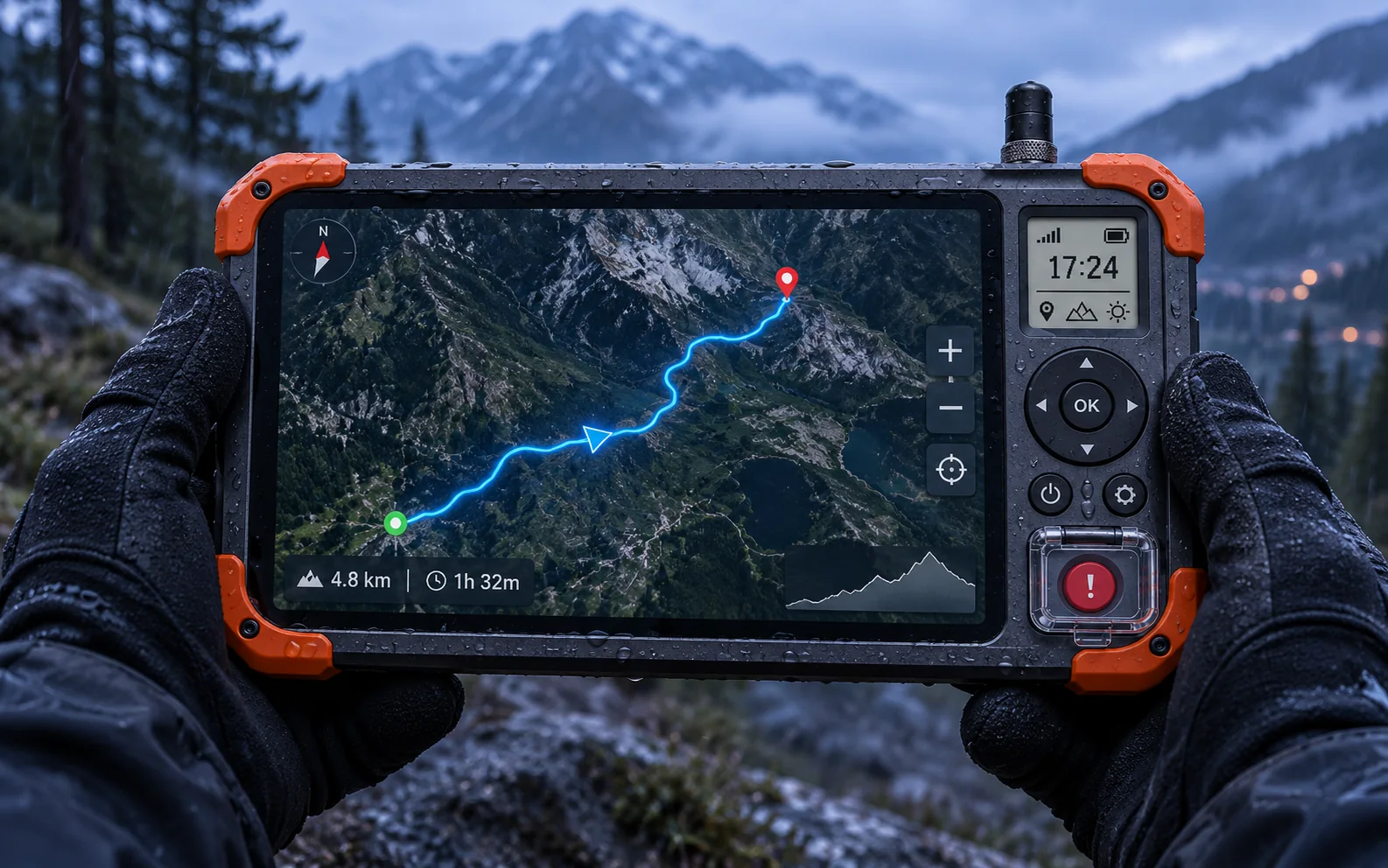
Big buttons that work through gloves, a screen you can read in sunlight, and a shell sealed against the weather.
LoRa reaches a few kilometres. The mesh relays messages from device to device to go further, riding on Meshtastic so cheap stock radios can relay too. The protocol is proven in a simulated valley; real radios are next.
Sent by the safety chip, signed with an Ed25519 key that never leaves it. It carries your last position, the CO level and the reason, and repeats until cancelled.
A device never shows or sounds anything it hasn't verified itself, even when relays forward everything. Replayed or forged alerts stay silent.
End-to-end encrypted messages with delivery receipts. Location sharing per group, with optional fuzzing to about 100 m or 1 km.
Hold two devices together and compare a 6-digit code. Someone in the middle gets one guess in a million.
Built so it can find a lost child, and so it can't be used to hunt someone who is hiding.
A virtual lab runs the real safety-chip firmware, on a PC and as the ARM binary in an emulator, and simulates the whole mesh: airtime, path loss, collisions, stock relays and partitions. These are 30 random runs of a 10-device valley, about 1.2 km apart.
| Scenario | Reached every device |
|---|---|
| Missing-child alert and "found" | 30 / 30 |
| Report and sighting reach a moderator | 30 / 30 |
| Endorsed child alert, no moderator | 29 / 30 |
| Safety-chip SOS and its cancel | 30 / 30 |
| Forged or adult-endorsed alerts shown | 0 |
The software comes first. Run it on a laptop today, and move to dedicated hardware as it arrives.
Product images are concept renders
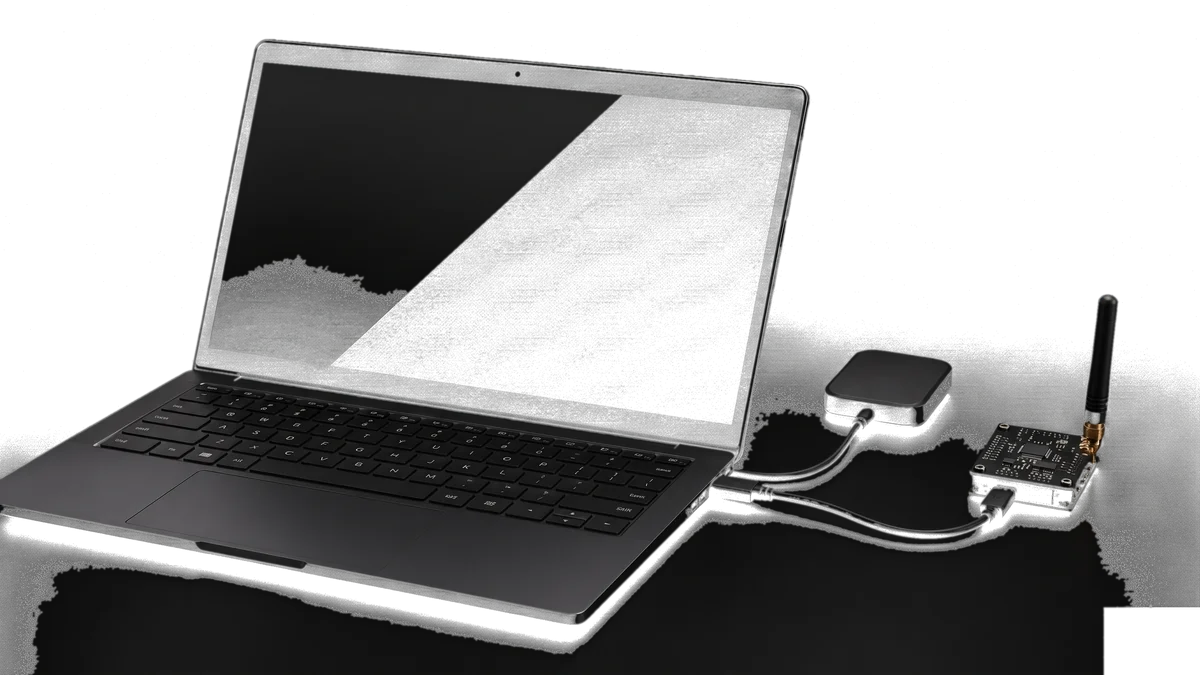
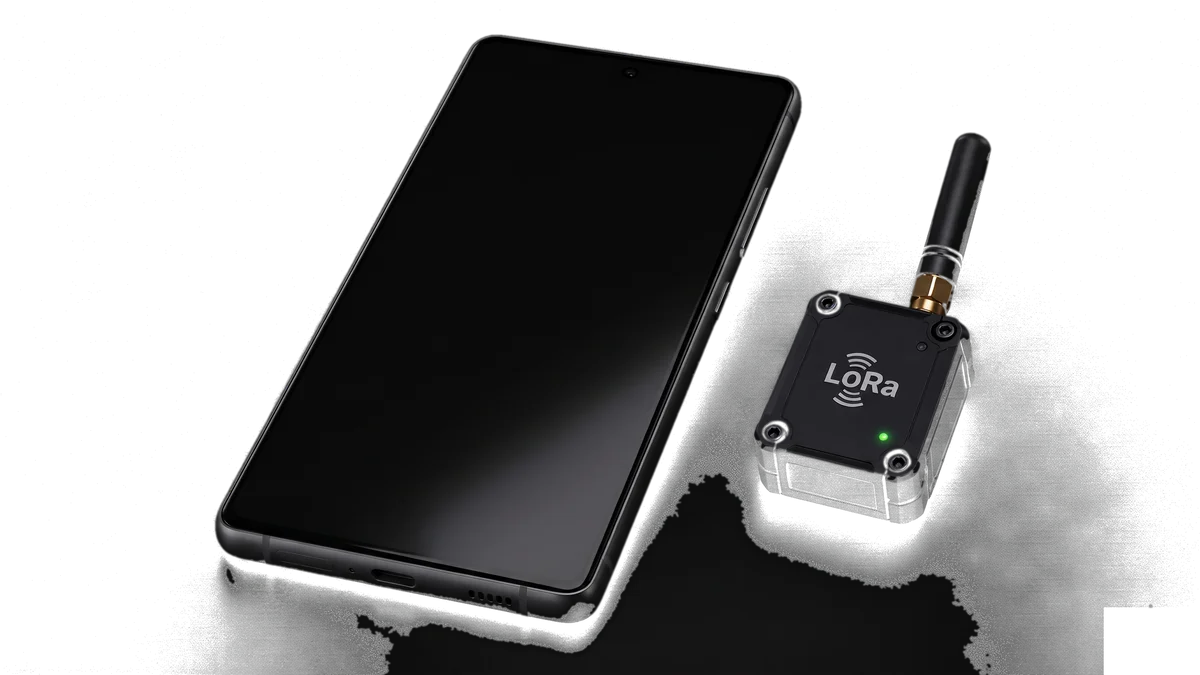
Your phone can be the screen over a hotspot you trust.
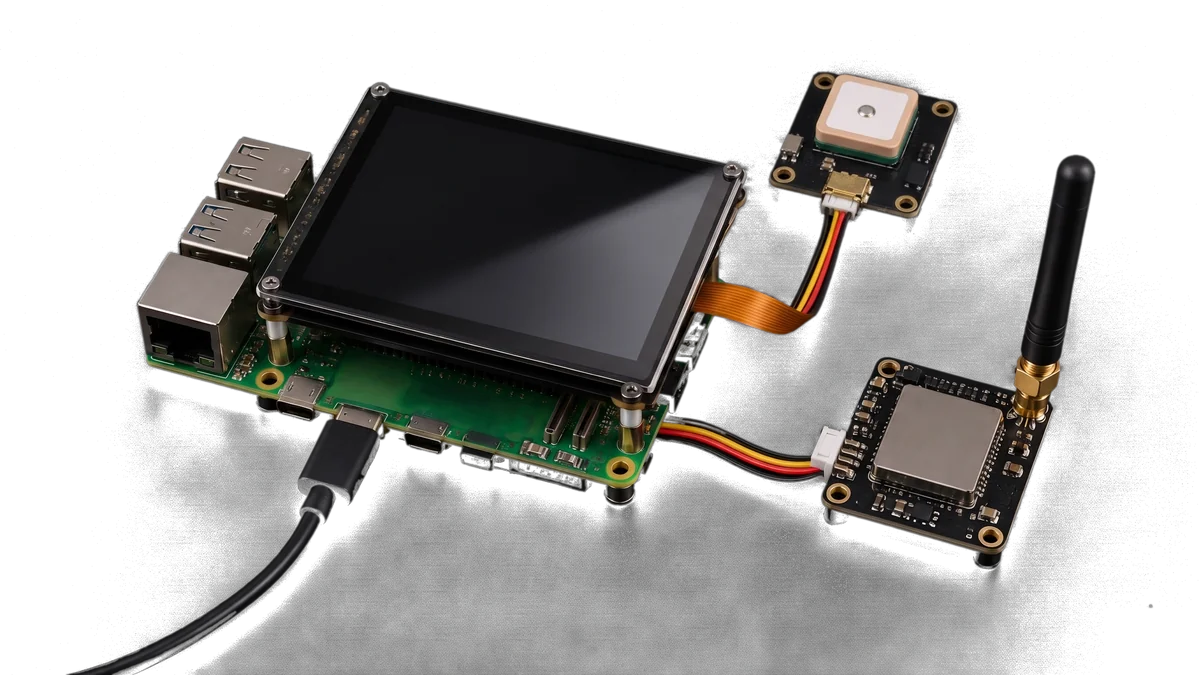
Any stock Meshtastic node on a rooftop or ridge extends the mesh. It relays packets it cannot read.
Satellite messaging is the next horizon. When the mesh has no neighbour to hop to, an SOS could go to orbit instead, and one device with a sky link could carry a whole valley's messages out. We're evaluating short-burst satellite messaging and NB-NTN direct-to-device links. It is not part of version 1.
Done
Now
Next
Then
Exploring

The software runs on a laptop today. The tablet is next.